
If you’ve been keeping a close watch on the energy price and your energy bills, you’ll know that the Energy Price Cap has been a vital safeguard since its introduction in January 2019. It was designed to prevent households from being overcharged for their gas and electricity, offering some protection against soaring prices. However, from 1st April 2025, the cap will rise by 6%, pushing costs higher for many homes across the UK.
So, what does this actually mean for you? Let’s dive into the details, explain what’s behind the increase, and explore how you can manage your energy costs effectively.
The Energy Price Cap, introduced by Ofgem (the UK’s energy regulator), was brought in to stop energy suppliers from charging excessive rates, particularly for those on standard variable or default tariffs. These tariffs are the go-to option for most households, especially once fixed-rate deals expire.
Before the cap, customers on these flexible tariffs were often stung with inflated rates, especially when wholesale energy prices spiked. The cap sets a limit on how much suppliers can charge per kilowatt hour (kWh) of electricity and gas. It also regulates the standing charge, the daily fee you pay just for being connected to the energy grid, regardless of how much you actually use.
The cap is primarily influenced by wholesale energy prices, the amount suppliers pay for the energy they distribute. When these wholesale costs rise, the cap increases, and when they fall, the cap should drop. However, market volatility over the past few years has kept prices stubbornly high.
It’s worth noting that the Price Cap only applies to standard and default tariffs. If you’re on a fixed-rate tariff, the cap won’t directly impact your current bills. However, once your deal ends, you could face higher prices if market rates remain elevated.
Despite wholesale prices easing off from their peak, they remain significantly above pre-2021 levels. There are several factors keeping energy prices high:
Following the COVID-19 pandemic, energy demand surged as economies reopened and industries resumed operations. This sharp increase in demand, combined with supply chain issues, created shortages that drove prices up.
The Russia-Ukraine conflict has had a lasting impact on global gas supplies. In response to the war, many European countries reduced or completely cut off Russian gas imports, creating further supply constraints. Although the UK doesn’t rely heavily on Russian gas, the ripple effect of tighter supplies across Europe has still driven up wholesale prices.
The cost of generating and supplying energy, particularly from natural gas, has increased. As production expenses climb, suppliers pass these costs on to customers.
The UK’s shift towards renewable energy sources, such as wind and solar, involves substantial infrastructure investment. The costs associated with this transition are gradually being reflected in consumer bills, contributing to higher prices.
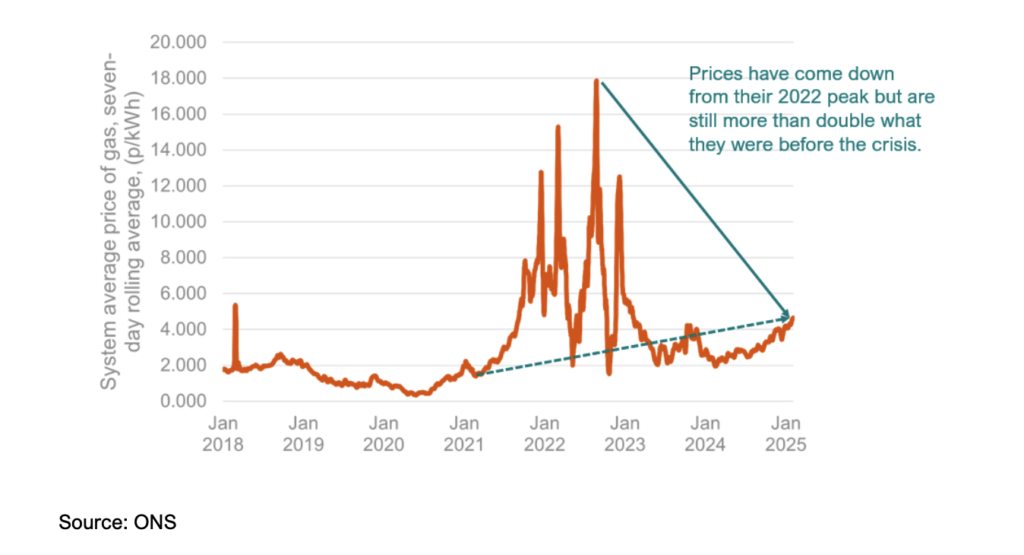
Even though wholesale prices have come down significantly from their crisis peak, they remain far higher than before 2021. This is why households are still paying considerably more for energy compared to pre-crisis levels.
From 1st April 2025, the Energy Price Cap will increase by 6%, raising the average annual bill for a typical household paying by Direct Debit to £1,849.
This increase is primarily due to rising wholesale energy costs, driven by ongoing global supply and demand pressures, geopolitical instability, and production expenses.
If you’re on a standard variable tariff (also called a default tariff), here’s what you’ll be charged for your energy between 1st April and 30th June 2025:
Electricity Rates
Gas Rates
These figures reflect the average rates across England, Scotland, and Wales, including VAT.
How Will This Affect Your Bills?
If you’re on a standard or default tariff, your energy bills will increase slightly from April. However, the exact impact will vary depending on how much energy you use.
For instance:
It’s also important to understand that the Price Cap doesn’t limit your total bill, it only caps the unit rates and standing charges. Therefore, the more energy you consume, the more you’ll pay.
Although the Price Cap is going up, there are still steps you can take to keep your bills manageable:
Explore Fixed-Rate Tariffs: If you’re still on a standard variable plan, it might be worth checking out fixed-rate deals. While fixed rates won’t necessarily be cheaper, they offer price stability, protecting you from further sudden increases.
Cut Back on Energy Usage: Reducing your consumption is one of the most effective ways to control costs. Simple habits, such as switching off unused appliances, using LED lighting, and lowering your heating by a degree or two can make a noticeable difference.
Compare Energy Providers: Even with the Price Cap in place, it’s worth shopping around. Some suppliers may offer more competitive rates or additional perks, like discounts or cashback offers, which could help lower your costs.
Check for Government Support: Keep an eye out for government schemes and discounts designed to help with energy bills. Many households are eligible for financial assistance, such as the Warm Home Discount or grants for energy efficiency improvements.
The 6% increase in the Energy Price Cap on 1st April 2025 is yet another indication that energy prices remain high, despite dropping from their crisis peak. The higher cap will push bills up for most households, but you can still take steps to minimise the impact; to fall in line with this huge change, our simpler recycling guide can help you and your business by providing the proactive steps to take to ensure compliance is followed.
By being proactive, whether that’s exploring fixed-rate deals, reducing your energy consumption, or seeking financial support; you can keep your energy costs in check.
Staying informed and making small but effective changes to how you use energy will help you stay on top of your bills, even as prices continue to fluctuate.