Pallet racking looks simple from the aisle, but the wrong choice is expensive to live with. Beams that are the wrong height for your pallets, a layout that eats too much floor, or a system that cannot take your load, and you are stuck with it for years. This is how to get the specification right the first time.
Start with three numbers: the weight of your heaviest loaded pallet, the dimensions of your pallets, and the height you can safely use in the building. Everything else follows from those. The racking has to be rated above your heaviest pallet with room to spare, the beam levels set to suit your pallet heights, and the run designed around your forklift’s reach and turning space.
Get the survey done properly. Floor loading, building height, sprinkler clearances and the forklift you run all shape the design, and they are much cheaper to account for on paper than to discover after installation.
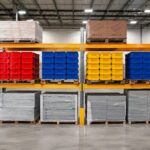
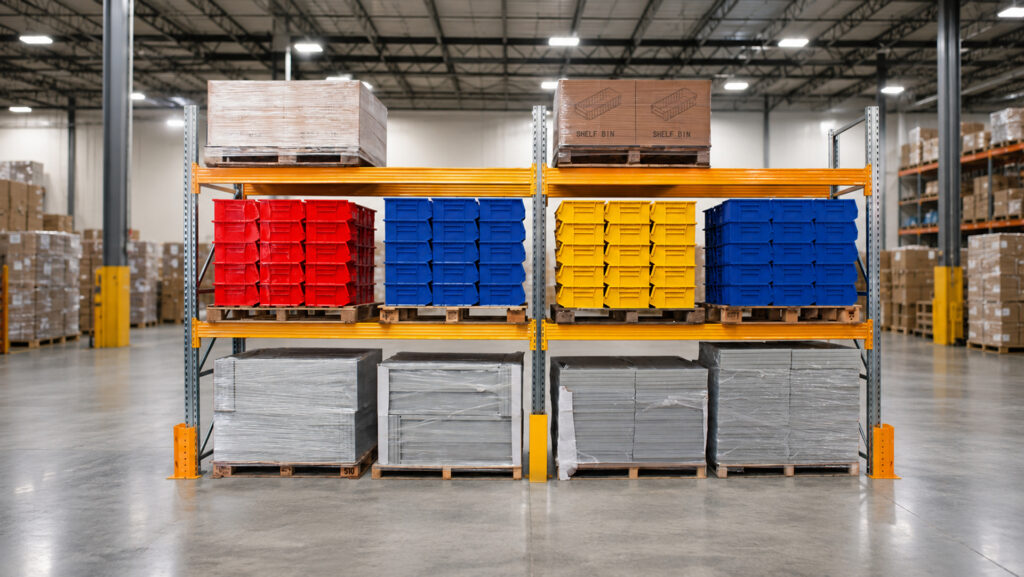
Standard adjustable pallet racking is the workhorse: upright frames joined by horizontal beams, with the beams repositionable so you can retune levels as your stock changes. It gives direct access to every pallet, which is why most warehouses use it. The beams carry the load, so the beam rating and the way beams connect to the uprights are what matter most for safety.
You can see the beams, frames and accessories in the pallet racking range, including pallet racking beams, support bars and timber decking panels for boxed or loose goods.
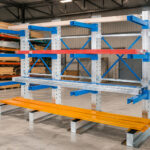
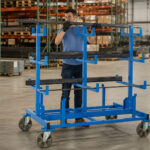
If you store long or awkward loads, timber, tube, sheet material, profiles, adjustable pallet racking fights you. Those belong on cantilever racking, which has arms rather than beams and no front upright to get in the way. If you are storing sheet metal or panels specifically, that is a cantilever job.
For long loads see our cantilever racking. For loose retained loads, pallet retention cages keep everything contained on the racking.
Racking gets hit by forklifts. Designing in upright protection and being clear about the safe working load from day one is far cheaper than dealing with damage or a collapse later. Load notices, regular inspection and column protection are not nice-to-haves, they are how a racking system stays safe over its life.
How do I know what load rating I need?
Size the racking above the weight of your heaviest loaded pallet, with a safety margin. A proper site survey factors in floor loading, building height and your forklift before finalising the design.
What is the difference between pallet racking and cantilever racking?
Pallet racking uses beams and suits palletised goods with direct access. Cantilever racking uses arms with no front upright, which suits long or awkward loads like timber, tube and sheet material.
Can pallet racking beam levels be changed later?
Yes. Adjustable pallet racking lets you reposition beams to retune levels as your stock profile changes, which is a large part of why it is so widely used.
Is racking safe to buy and fit yourself?
The design should be based on a proper survey of your loads, floor and building. Correct installation, load notices and regular inspection are essential for safe use.