
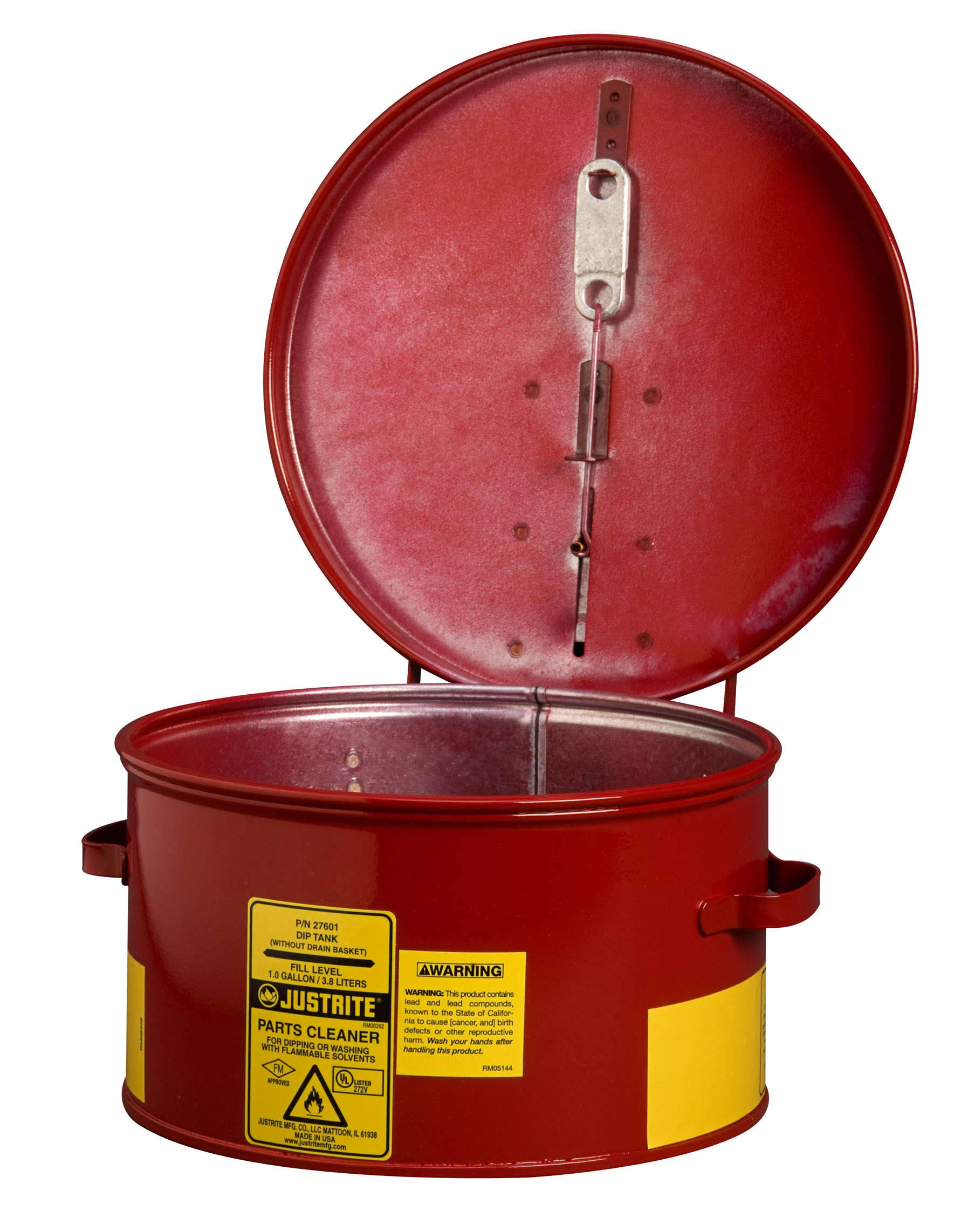
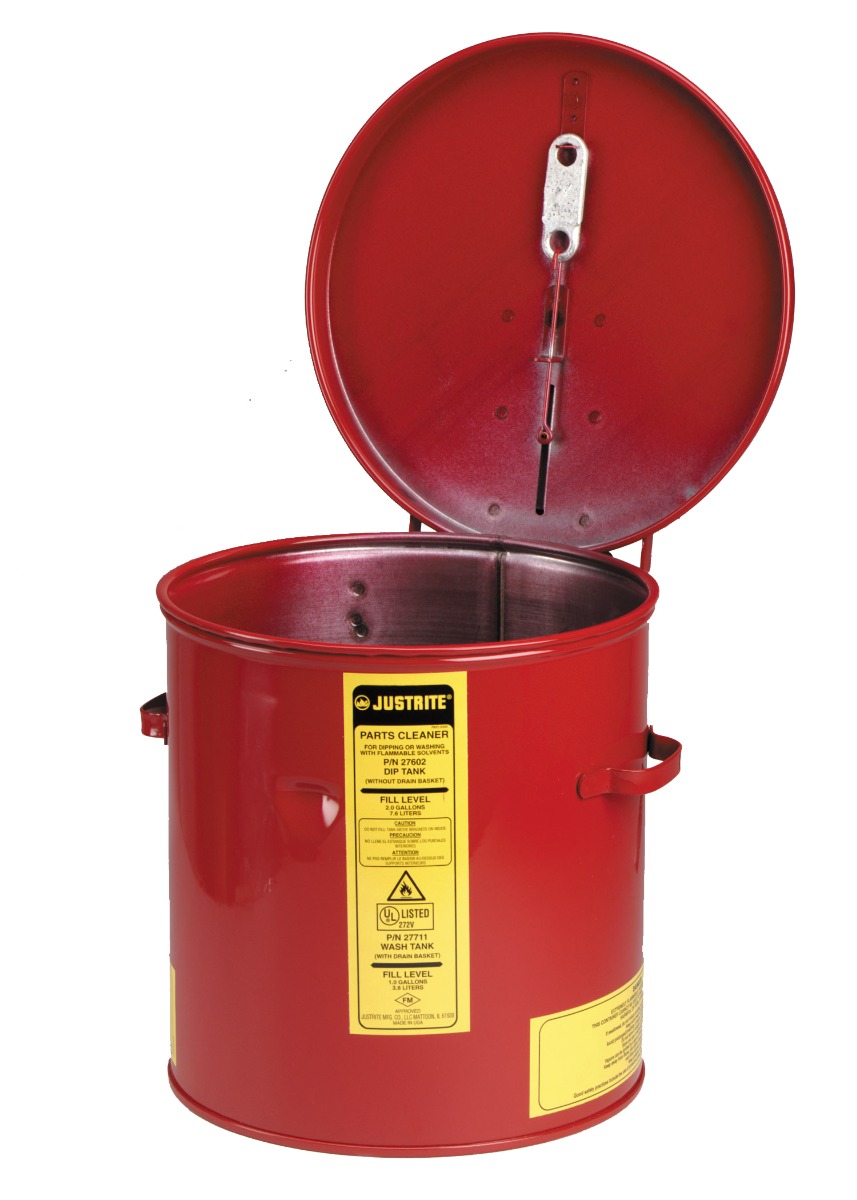
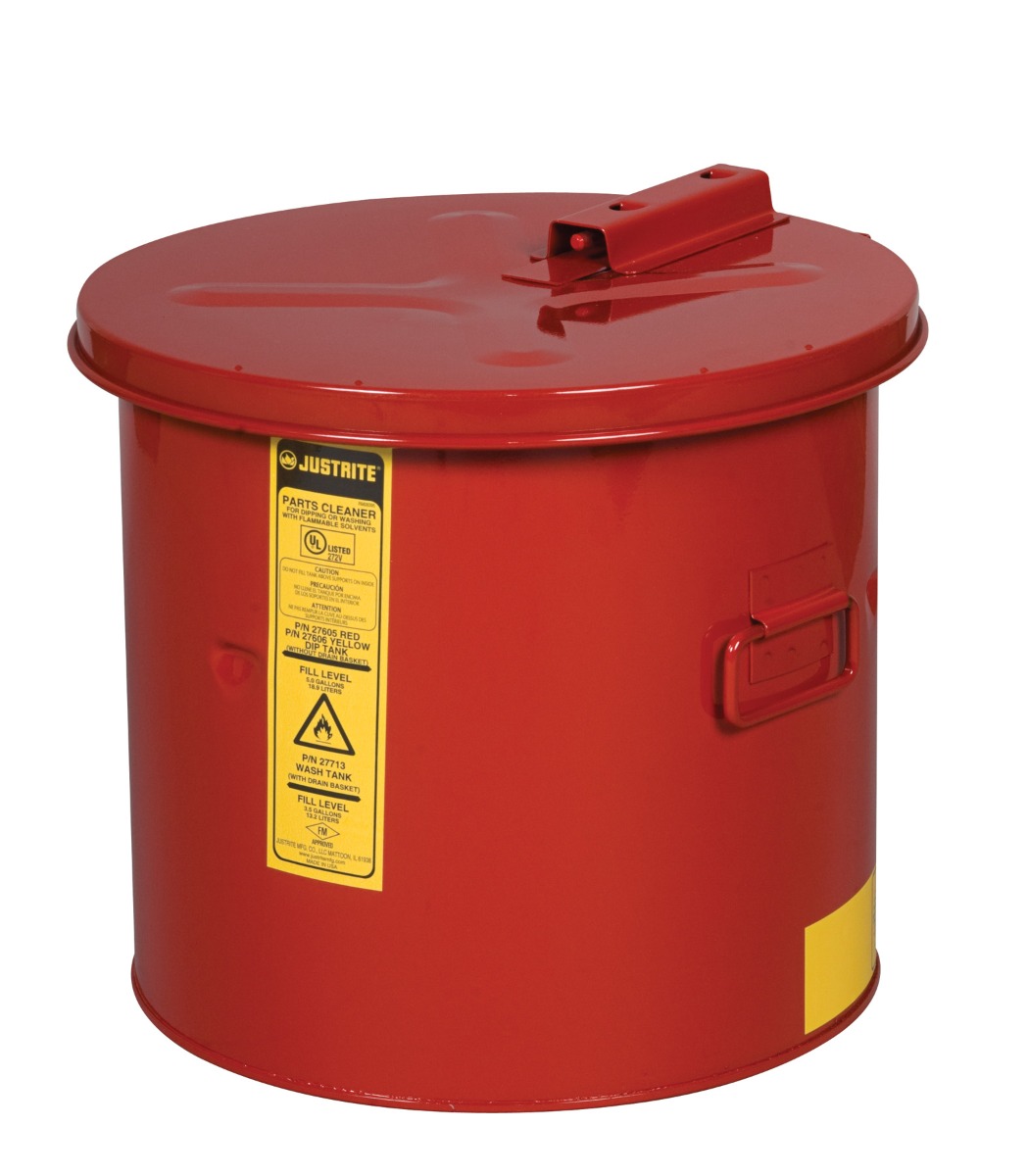
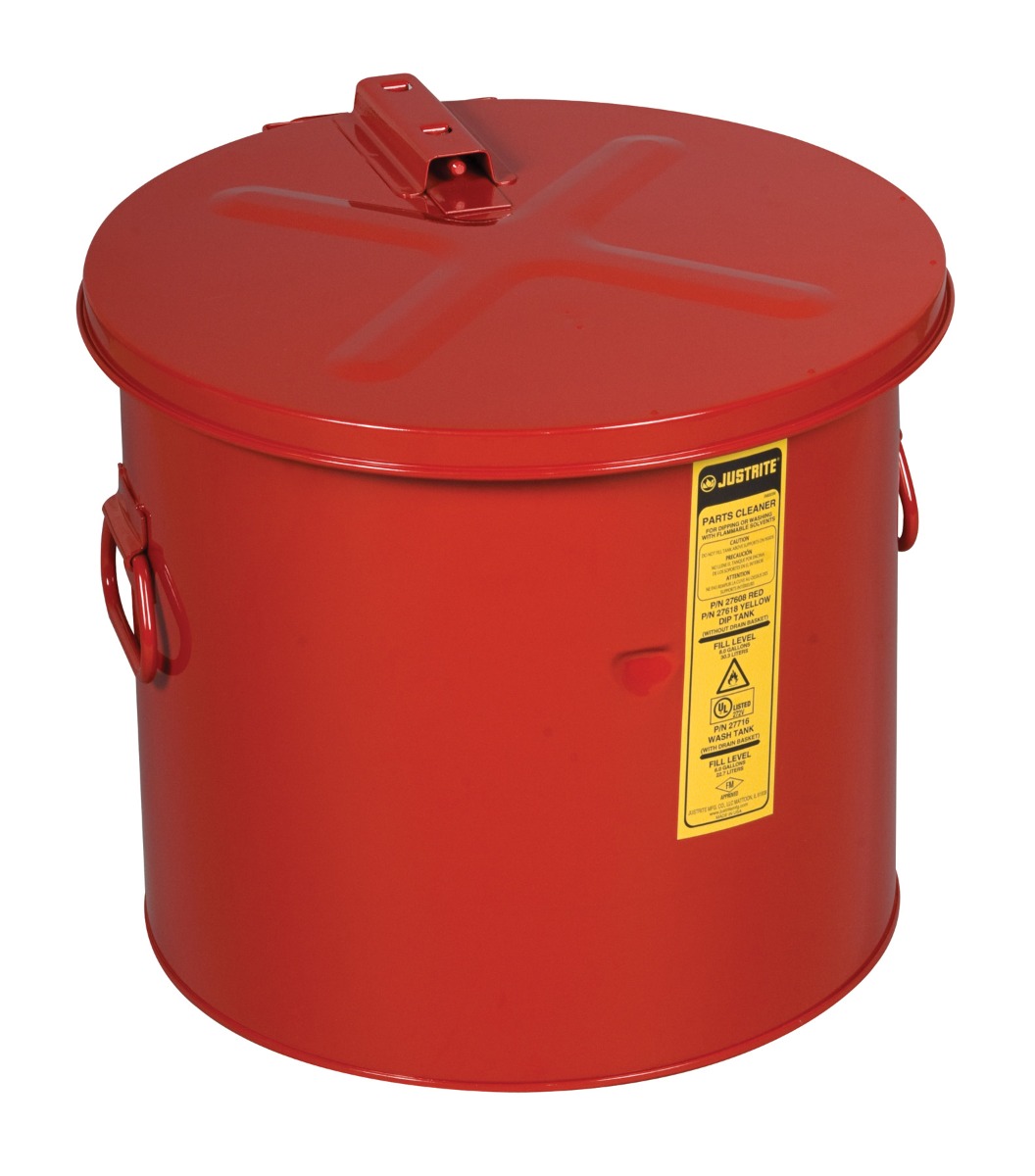
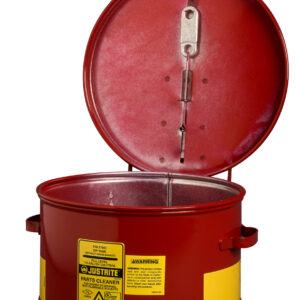
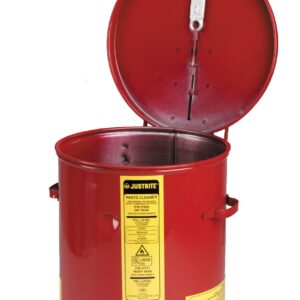
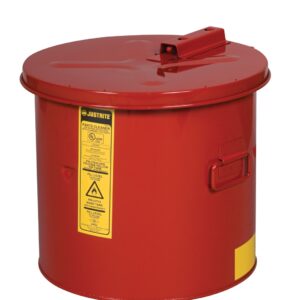
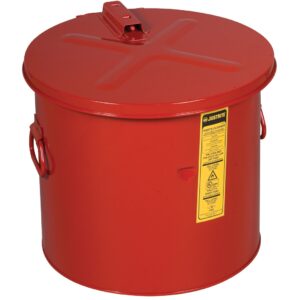
Dip tanks provide a practical and efficient solution for cleaning parts and sub-assemblies in workshops, maintenance environments and industrial settings. Designed for situations where the volume of work does not require a larger rinse tank, they offer a compact and cost-effective way to carry out routine cleaning tasks safely and effectively.
Ideal for use in engineering workshops, manufacturing facilities, garages and maintenance departments, dip tanks allow components to be immersed and cleaned with ease. Their simple design makes them suitable for a wide range of applications, including degreasing, parts preparation and general maintenance work.
Built with safety in mind, dip tanks feature lids that remain open during use for convenient access, allowing operators to work efficiently without interruption. In the event of a fire, the self-closing mechanism is activated by a fusible link that melts at 74°C, automatically shutting the lid to help contain flames and reduce risk.
These tanks provide a reliable and space-efficient cleaning solution for businesses that require regular parts cleaning without the need for larger-scale equipment. For workplaces focused on safety, practicality and efficiency, dip tanks are a dependable choice for everyday industrial use.
Key Features & Benefits
- Designed for cleaning parts and sub-assemblies
- Ideal for low to medium volume cleaning tasks
- Compact alternative to larger rinse tanks
- Lid stays open for easy and convenient access
- Self-closing lid mechanism for added safety
- Fusible link activates at 74°C to shut lid in case of fire
- Helps contain flames and reduce fire risk
- Suitable for workshops, garages and industrial environments
- Durable construction for regular professional use
FAQs
What are dip tanks used for?
Dip tanks are used to clean parts and sub-assemblies by immersing them in cleaning solutions, making them ideal for maintenance and workshop environments.
Who typically uses dip tanks?
They are commonly used in engineering workshops, manufacturing facilities, garages and maintenance departments.
When should I use a dip tank instead of a larger rinse tank?
Dip tanks are ideal when the volume of cleaning work is lower and a compact, space-saving solution is more practical.
How does the self-closing lid work?
The lid is held open during use but will automatically close in the event of a fire to help contain flames.
What is a fusible link?
A fusible link is a safety component that melts at a specific temperature (74°C), triggering the lid to close automatically.
Are dip tanks safe to use in workshops?
Yes, they are designed with safety features such as self-closing lids to help reduce fire risk in industrial environments.






Reviews
There are no reviews yet.